About the Initiative
The Inclusive City Initiative is PEI’s center for critical urban inquiry rooted in the lived realities of Nepal. As Nepal rapidly urbanizes, this initiative explores how cities are shaped by social, political, and ecological forces — and how alternative, more inclusive urban futures can be imagined and built.
We understand the urban not simply as built form, but as a contested and negotiated space — produced by power, shaped by resistance, and full of possibility. From informal settlements and heritage towns to peri-urban sprawl and vertical growth, the Inclusive City Initiative brings together theory, fieldwork, and public engagement to interrogate how urban life is governed, experienced, and transformed.
Our Approach
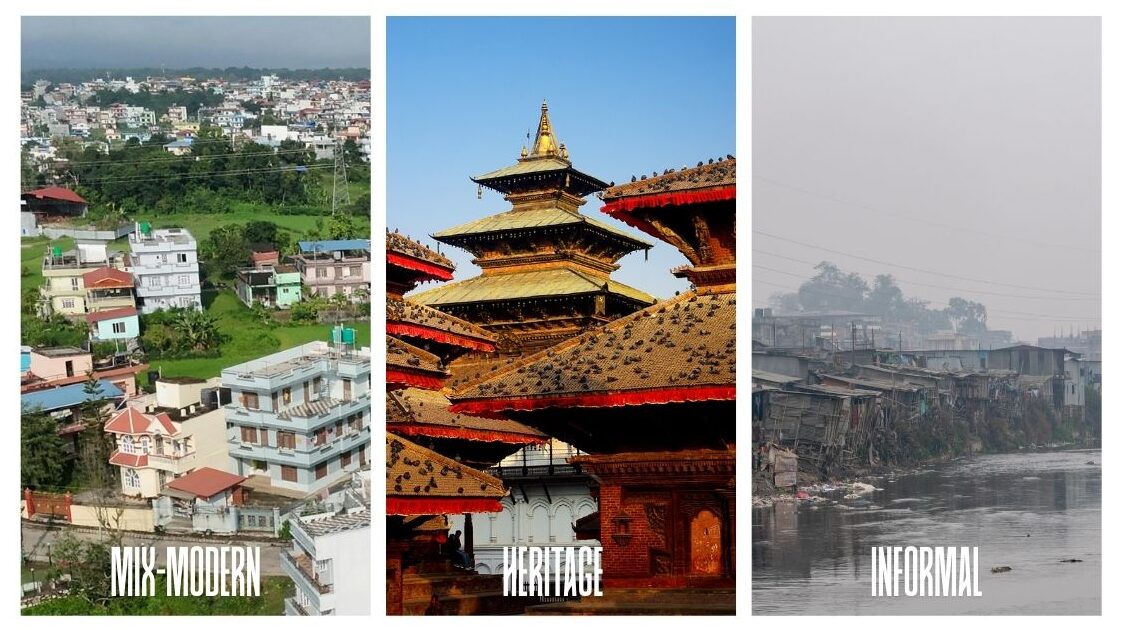
We view the urban not simply as built form, but as a contested and negotiated space — produced by power, shaped by resistance, and full of possibility. To explore this complexity, we turn to the framework of “the three cities”:
By studying how these three cities overlap, collide, and reshape each other, we reveal the tensions and opportunities that define Nepal’s urban future. Combining research, fieldwork, and public engagement, the initiative works with communities, local governments, and development partners to co-create urban futures where growth does not come at the expense of equity, culture, or ecology.
Leadership
The Inclusive Cities Initiative is guided by a team of scholars and practitioners with deep expertise in urban studies, governance, and community engagement. Together, they are shaping the initiative into a critical space within PEI for research, dialogue, and action on Nepal’s urban transition.
Sabin Ninglekhu
Team Lead
Anusha Khanal
Researcher